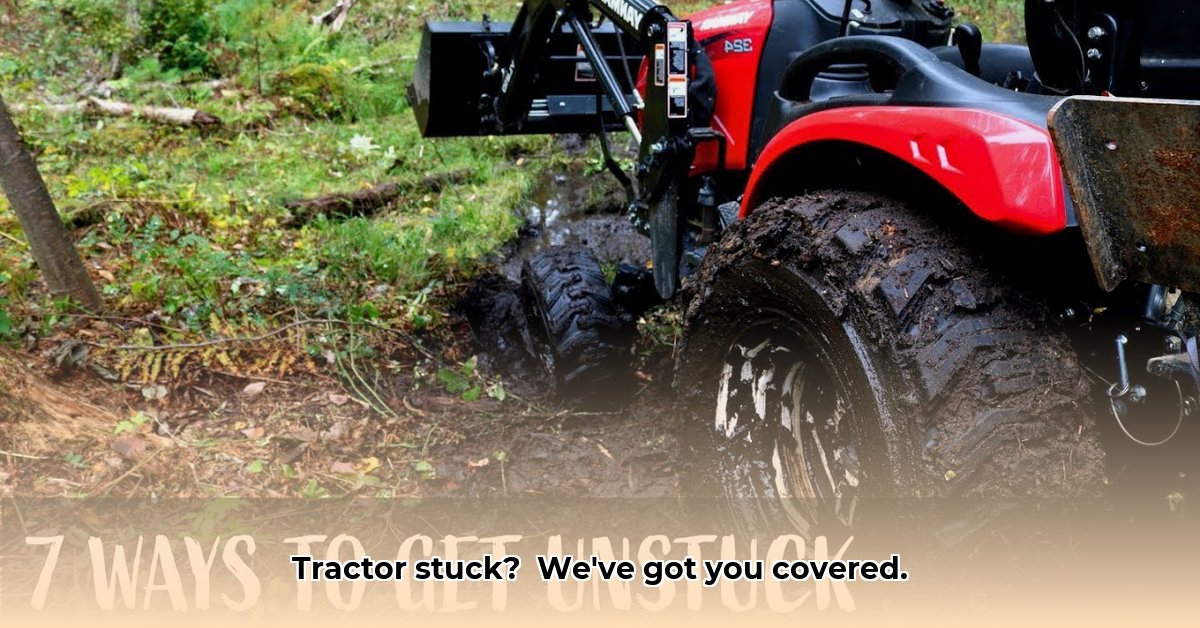
Assessing the Situation: Before You Begin
Before attempting to move your stuck tractor, carefully assess the situation. This initial inspection is crucial for safety and choosing the right recovery method. What type of ground are you on? (Mud, snow, sand, etc.) How deep is your tractor sunk? Is it leaning? Are there any obstacles nearby? Answering these questions will guide your approach. A thorough assessment prevents further damage and ensures your safety. For more detailed guidance, check out this helpful guide.
Gathering Your Gear: Essential Equipment
Getting your tractor unstuck requires the right tools. Don't attempt this with inadequate equipment. You'll need heavy-duty recovery straps rated well above your tractor's weight. A powerful recovery vehicle (with sufficient pulling capacity) is essential. A winch significantly aids the process. Shovels, sturdy planks (for improved traction), and strong chains may also be necessary depending on the conditions. Always inspect your equipment for damage before you begin. Using damaged equipment is extremely dangerous.
Choosing Your Extraction Strategy
The best extraction method depends entirely on the circumstances. If your tractor slid backward into a ditch, pulling forward might be easiest. If it simply lost traction, pulling backward might be more effective. Sometimes, a combination of approaches is best. Careful consideration is crucial before making your first move. Remember, patience and a strategic approach are key. Have you considered the impact on soil compaction? Minimizing this is essential for long-term land health.
Step-by-Step Tractor Extraction Guide
Here's a step-by-step guide to safely extract your tractor:
Prioritize Safety: Secure the area. Warn bystanders to stay clear. A sudden movement during recovery could be hazardous. Always wear appropriate safety gear.
Secure Attachments: Attach recovery straps firmly to both your tractor and the recovery vehicle, following the manufacturer’s instructions precisely. Incorrect attachment can lead to serious accidents.
Winch Operation (If Applicable): If using a winch, engage it slowly and steadily. Jerky movements can damage equipment and pose safety risks.
Gentle Pulling: Begin pulling gently. If you encounter significant resistance, stop immediately. Forcing the issue can lead to further damage.
Improving Traction: Use shovels and planks to create a more solid base beneath the tractor's wheels. Carefully position them to distribute weight effectively.
Re-evaluate and Adapt: If your initial method isn't working, stop and reassess. Change your strategy and try a different approach. Perseverance is good, but knowing when to adapt is crucial.
Post-Extraction Inspection: Once free, thoroughly inspect your tractor and recovery gear for damage. Addressing problems immediately prevents future issues.
Prevention: Avoiding Future Issues
Proactive measures significantly reduce the risk of future incidents.
Regular Tire Pressure Checks: Maintain correct tire pressure to maximize traction and minimize the chances of getting stuck. Under-inflated tires are a major contributor to getting stuck.
Avoid Overloading: Never overload your tractor. Know its weight capacity and adhere to it strictly. Overloading greatly increases the risk of getting stuck.
Strategic Route Planning: Use GPS technology to avoid challenging terrain. Proper route planning can significantly reduce the risk of getting bogged down.
Smart Soil Management: Implement best soil management practices. This includes proper drainage, avoiding muddy fields, and maintaining soil structure. These techniques will improve traction and greatly reduce the risk of your tractor getting stuck.
Common Causes of Tractor Entrapment
Understanding why tractors get stuck helps prevent future incidents.
| Cause | Likelihood | Mitigation |
|---|---|---|
| Low Tire Pressure | High | Regular pressure checks; properly inflated tires |
| Overloading | High | Careful weight distribution; avoid exceeding limits |
| Soft Ground | Medium | Avoid soft areas; use wider tires if necessary |
| Poor Traction | Low | Regular maintenance; consider added wheel weights |
Remember, safety is paramount. If you are ever unsure about any aspect of this process, seek professional assistance. A stuck tractor is frustrating, but a serious injury is far worse. Take your time, prioritize safety, and get back to work!